Google May Message Webmasters With Mobile First Indexing Issues

i hope you like this post on Google May Message Webmasters With Mobile First Indexing Issues

So we know Google is testing that mobile first index and that the rollout will be done in batches and now John Mueller has explained how they think they might roll this mobile first index out.

First, it is likely that based on those classifiers, which we mentioned here, that Google will roll out the first batch to pages that are equivalent between desktop and mobile. Then, Google will likely begin some level of communication, be it via blog posts, direct communication and/or Google Search Console notifications for those who have issues.

Google may classify a percentage of the web pages on the internet as having issue X, when it comes to this roll out and notify them all via Search Console with steps they can take to resolve the issue. Then the same with issue Y and Z. As Google is able to classify more and more issues, they can aid more and more webmasters on how to fix these issues so the rollout has quality neutral release.

Here is the video embed where John talks about the plans for the rollout:

[embedded content]


Transcript:

It is one of those things that we need to make sure that the changes we make actually work out well. We are creating some classifiers internally to make sure that the mobile pages are actually equivalent to the desktop pages and that sites don’t see any negative effects from that switch. And those are things we need to test with real content, we can’t just make up pages and say this is well kind of like a normal web page. We really have to see what happens when you run it with real content.

At some point there may be aspects [of the mobile first index rollout] that are more visible but like with a lot of search experiments, these are things that most people don’t notice because in an ideal world, things should just work the same.

So that is kind of what we are looking at there, looking to do it as a step by step way. Rather then just switch it on and everything breaks. To kind of do this gradually.

The idea behind this classifier is to kind of recognize common problems that we can do some blog posts around those common problems, so people are aware of what they should watch out for, what they should be fixing, what kind of issues they should be looking at.

link to main source

Local SEO: 7 Google My Business questions asked and answered

See details of post Local SEO: 7 Google My Business questions asked and answered below

Consumers are increasingly searching online for shops, grocery stores, restaurants, car dealers, realtors and other businesses in their local area. Not surprisingly, four out of five people use search engines to find local information, like a company’s business hours, address, phone number, online reviews, busy times and more, according to Google.

Google research also shows that businesses with detailed, complete, up-to-date online business listings are twice as likely to be considered reputable by consumers. (If you’ve ever looked up a local business online and driven all the way across town to their location only to find that they’ve moved, you know how frustrating that can be. When that happens, do you blame Google? Nope. You blame the business. And you’ve just lost trust in the business.)

Getting a local business listed on Google My Business (GMB) and other online directories is one of the fastest and easiest ways to get a local business to start showing up for local search results on Google. Google My Business connects businesses directly with their customers — whether they’re searching on Google Search or Maps.

Most SEOs who work with local clients consider claiming their GMB listing a first step in their SEO strategy. Surprisingly, 56 percent of local businesses haven’t claimed their Google My Business listing, according to Local Business Institute.

SEOs have a lot of questions about Google My Business

At the outset, Google My Business looks pretty straightforward. You fill in the company’s information, claim and verify the listing, add information about the company, post a few images and you’re good, right? Well, not so fast. Depending on the client, their business type and their listing, GMB can get complex. Here are seven common questions about Google My Business:

Q. I’ve heard people in the search industry talk about “Google Top Contributors.” What is a Google Top Contributor, and what is their relationship with Google?

A. A Google Top Contributor is a digital marketing professional who knows the ins and outs of Google products. These Top Contributors volunteer their time to respond to questions on Google Product Forums. (Yes, there’s even a specific forum for Google My Business.) The Google Product Forums allow people to interact with a community of other users to help answer Google product questions.

If you’re interested in becoming a Top Contributor, you want to be on the forums as much as possible, answering questions and engaging in the conversations. Google is constantly watching who’s saying what and tracking everything that goes on in the various product forums.

To get started, search the forums for questions and answer the questions you have knowledge and expertise on. Once you start answering questions, you’re eligible to join the Top Contributor Program and become a “Rising Star” (the first stage to becoming a Top Contributor.) Google is on the lookout for people who are helpful and show off their product knowledge — and have a willingness to help others.

Why would anyone want to spend a lot of their personal time answering questions on a forum? Well, there are perks that go along with being a Google Top Contributor. First, you often get better access to Google itself. This means that people can contact you directly about an issue they’re having, and you can escalate it to your contacts at Google. You could also become part of beta programs, be invited to groups and Google meetings, become a Google thought leader and more. It takes a lot of time to answer questions, but if you want to be a pro in the Google world, becoming a Google Top Contributor is the way to go!

Q. I’m setting up my client’s GMB account. To do this, I’m creating a separate Gmail email address to claim their listing. Is this the right way to do it?

A. First, it’s always best if the client claims their GMB page and then makes you a manager of the page. You can then log in and optimize their Google My Business listing:

Google My Business Manager

If the client doesn’t feel comfortable claiming their listing, keep a few things in mind before you jump in on their behalf:

  1. Make sure you get express permission from them to claim their Google My Business listing on their behalf.
  2. Don’t create a Gmail email address for the setup of GMB. Instead, use the client’s domain email address as the primary email address (e.g., info@companyname.com) and add yourself as a manager of the listing. This way the client gets all communications and will always maintain control of their listing — but you will also be kept in the loop as a manager.
  3. Additionally, don’t use your personal cell phone or your agency’s number when setting up a client’s GMB account — always use the business owner’s or business’s phone number. Why? What would happen if you left your agency or the client decides to switch agencies? It may be very difficult for the client to get control of their listing. Using the business’s phone number keeps the business owner in complete control of their listing, and it will also prevent your phone number from being flagged by Google as being used too much.

Q. I have a restaurant as a client, and they’ve recently updated their menu. We noticed that there’s an outdated menu on their Google My Business Page. How did it get there, and how can I fix this?

A. Chances are, the menu information was scraped from a site called singleplatform.com. Single Platform is a site that helps restaurants and other service businesses show their menus and service listings consistently across many platforms (including Google.) Think of them as the “Yext” for menus.

To remove the Single Platform menu link from your client’s Google My Business listing, the business owner will need to contact Single Platform and request it be removed. The business listing owner should then contact Google My Business support and request it be removed.

Q. A former employee verified my client’s Google My Business listing, and we don’t know what email address they used. What should I do?

A. This is actually a common problem. Many businesses have a Google My Business listing that’s already been verified by either an employee, an agency or the owner, but they’ve forgotten which email address they used. Now that employee or agency is gone, and the business owner doesn’t know how to get access to their GMB listing.

Since the Google My Business listing is “owned” by the person who verified the listing, it’s important for the owner to get back control of their listing.

First, confirm that the business is listed on Google My Business:

  1. Go to Google My Business.
  2. Sign in with the Google account you think may have been used to claim/login to your business listing.
  3. Search for the business name and address.
  4. If the business appears in the search results, click on the listing.
  5. If you see a dialog that says that someone else has verified the business, select one of these options:

Try a different email address

If you’re like most people, you probably have more than one email address. You might have verified your business using one of your other email addresses. Try signing out, and then sign back in with one of your other Google accounts.

You will see any listings that have been verified with this Google account. If you still don’t see the business listing in any of the owner’s Google accounts, then you will need to contact the current listing owner.

Request access from the current listing owner

Google allows you to contact the current listing owner directly through Google My Business so you can request access to own or manage the business listing.

To request access from the current listing owner:

  1. Go to Google My Business.
  2. Sign in with the Google account you want to use to manage the business.
  3. Enter the name or address of the business and select it from the search results.

(Note: You might see a dialog that shows part of the email address that was used to verify the listing. The business owner might recognize that email address snippet. If the owner recognizes the email address, sign into that account to access the business listing.)

  1. Fill out the form with your contact information. The current listing owner might need to contact you, so you need to share your contact details with them.
  2. Click Submit.
  3. The current listing owner will get an email asking them to reach out to you and you’ll receive a confirmation email. Click on the link in the email to check the status of your request.
  4. Allow seven days for the current listing owner to respond to your request. If you don’t hear back from them after seven days, you can then go in and verify your affiliation with the business to get access to the business listing.

Q. There are fake reviews about my business on my Google My Business listing. Can I get them removed?

A. Google encourages businesses to ask for reviews from customers (unlike Yelp). It’s inevitable that at some point you will get a bad review from unhappy customers or people that have had a negative experience with your company. Getting these reviews removed is very difficult (freedom of speech).

If there’s a review that you feel violates Google’s review policies, you can mark the flag next to the review.

Flag Google My Business Reviews

However, typically, flagging the reviews will not get the review taken down unless the review blatantly violated Google’s review terms. Google allows anyone who has an “experience” with a business to leave a review. That means ex-employees, vendors, customers, postal carriers — just about anybody who has contact with your business can leave a positive or negative review about your company.

Since it’s not Google’s position to play “review cop,” it’s better to just try to get more positive reviews from happy customers so the negative/bogus review gets pushed down.

Q. How do you contact Google My Business Support? I’ve tried to find a way to contact them and am getting really frustrated!

A. There are several ways to reach out to Google My Business Support — but they don’t make it easy to find out how! Here are a couple of ways to reach GMB support:

check out here

Google extends olive branch to publishers, lays out new focus on subscriptions

See details of post Google extends olive branch to publishers, lays out new focus on subscriptions below

In a rare joint appearance, Google executives Philipp Schindler, chief business officer, and Sridhar Ramaswamy, SVP of ads and commerce, addressed a group of several dozen publishers and broadcasters at an event held at the company’s Chicago offices Tuesday. And, at that event, he extended an olive branch.

In his opening remarks, Schindler said Google returned $11 billion in ad revenues to publishers last year, while acknowledging, “We also know it has not been easy.”

Everyone in the room knew that one key reason publishers have had difficulty generating ad revenue is that Google and Facebook draw some 80 percent of the growth in digital ad dollars directly. But Ramaswamy said there are limits to what the ad ecosystem can do for publishers, adding that the industry must focus on both ads and subscriptions. Schindler said Google is committed to building out subscription programs and plans to significantly ramp investment in this area.

“We come in peace…We are all invested in seeing you [publishers] succeed” — Google chief business officer Philipp Schindler

The “leadership summit” came a day after Google announced the end of its decade-old First Click Free program in response to years of publisher complaints about the requirement to offer free access to content in exchange for Google rankings. Instead, Google said it will offer Flexible Sampling programs that give publishers more control over the subscription process without being penalized in the rankings for putting up paywalls.

Schindler touched on the three elements of Google’s new focus on subscription efforts:

  1.  Google will use machine learning to determine when to present a subscription offer instead of an ad on publisher’s sites to users deemed likely to subscribe. The system will also use publishers’ audience data to build lookalikes much in the way Google does in ad targeting, to identify new potential subscribers. This is in very early testing now, and it’s unclear exactly how this will look.
  2. Reduce friction in the subscription signup process with mobile-optimized checkout flows. Again, Google is doing something similar on the ad product side with Purchases on Google ads enabled with Android Pay. In a briefing last week, Google VP for News Richard Gringas said all subscriber data would be passed to and owned by the publishers.
  3. Help users get more from their subscriptions to boost renewal rates. For example, users might opt in to share subscription information with Google. Content from publications a user subscribes to may then show higher in Google search results for that user. Ramaswamy stressed this is “early days.”

Facebook announced this summer that it will begin testing ways to let publishers sell subscriptions in Instant Articles and place content behind a paywall after a user reads at least 10 articles.

In framing the new focus on helping publishers drive subscription revenue, Schindler said, “We come in peace,” as he splayed his fingers in the Vulcan peace sign, clearly anticipating publisher skepticism at Google’s motives. “We are here to listen to you. We are all invested in seeing you succeed.”

“We deeply value the publishing ecosystem,” said Ramaswamy later. “It’s also selfish on our part,” he acknowledged, “because Google is nothing without quality information.” Ramaswamy said Tuesday’s announcements are part of a long and ongoing effort. “The advertising ecosystem has been profitable for Google and publishers, but there are limitations. We need to pay attention to subscriptions and commerce.”

Schindler told reporters that details on how the subscription advertising program will be structured in terms of revenue splits haven’t been decided. “The plan isn’t for this to be a huge revenue driver or the next big business or Google,” he said. It could be a revenue share or some other model, but the idea isn’t to push this much beyond cost covering, said Schindler.

see more here

This Elastic Glue Can Seal Wounds In Under 60 Seconds

check out this post on This Elastic Glue Can Seal Wounds In Under 60 Seconds

A highly-elastic glue could be the future of treating wounds inflicted in car accidents or war zones, after it was shown to successfully seal open incisions in less than one minute.

The “potentially life-saving” MeTro gel, which is just administered directly to the site of the injury by squirting it from a syringe, could transform the way surgery is performed by negating the need for common staples and sutures.

Professor Anthony Weiss said: “The potential applications are powerful.”

Elastagen Pty Ltd

A team of biomedical engineers, from the University of Sydney, developed the adhesive substance, which is similar to silicone sealants used around bathroom and kitchen tiles, according to Professor Weiss.

Once applied to the area, it is treated with UV light and sets within 60 seconds.

It is also at this stage that it can be treated with a built-in degrading enzyme that can be modified to determine how long it lasts (between hours and months) before disintegrating. Unlike stitches that would have often required removal.

Once it has degraded, there is no signs of toxicity left in the body.

Elastagen Pty Ltd

So far it has been most useful for sealing wounds in body tissues that continually expand and relax, such as lungs, heart and arteries, that are otherwise at risk of re-opening with classic methods of stitching.

It also works on internal wounds that are often in hard-to-reach areas and have typically required staples or sutures due to surrounding body fluid hampering the effectiveness of other sealants.

Elastagen Pty Ltd

view original

SearchCap: Updates to AdWords daily budgets, Bing’s Dynamic Search Ads & more

See details of post SearchCap: Updates to AdWords daily budgets, Bing’s Dynamic Search Ads & more below

Below is what happened in search today, as reported on Search Engine Land and from other places across the web.

From Search Engine Land:

  • Google announces AdWords daily budgets can overspend by 2x, automatically
    Oct 5, 2017 by Ginny Marvin

    While advertisers won’t be on the hook for overages, the real question is why are daily budgets still the only option?

  • Visually understanding your site structure and external link weight impact
    Oct 5, 2017 by Dave Davies

    Looking for insights not easily gleaned through spreadsheets and raw data? Columnist Dave Davies explains how to use Gephi, a data visualization tool, to create a visual representation of your site structure with regard to inbound link strength.

  • Audiences to employ for extra online marketing bang!
    Oct 5, 2017 by Mona Elesseily

    Which audience lists are you using to amplify your paid search efforts? Columnist Mona Elesseily shares some of her favorites.

  • Bing Ads rolling out Dynamic Search Ads to US and UK
    Oct 5, 2017 by Susan Wenograd

    Advertisers can now let the Bing Ads algorithm match user queries and generate their ads.

  • Are Home Service Ads the death of home-based businesses on Google?
    Oct 5, 2017 by Joy Hawkins

    Google is expanding their Home Service Ads across more and more cities in the US, and some home-based business owners are worried. Columnist Joy Hawkins explains how this move impacts these businesses and what they can do to combat a loss of local search visibility.

Recent Headlines From Marketing Land, Our Sister Site Dedicated To Internet Marketing:

Search News From Around The Web:

Industry

check out here

Daily Search Forum Recap: October 4, 2017

i hope you like this article on Daily Search Forum Recap: October 4, 2017

url to main source

Google announces AdWords daily budgets can overspend by 2x, automatically

See details of post Google announces AdWords daily budgets can overspend by 2x, automatically below

On Wednesday afternoon, Google AdWords notified advertisers in their accounts and on Twitter that a change had already happened to the way budgets get handled on a daily basis. It is not going over well.
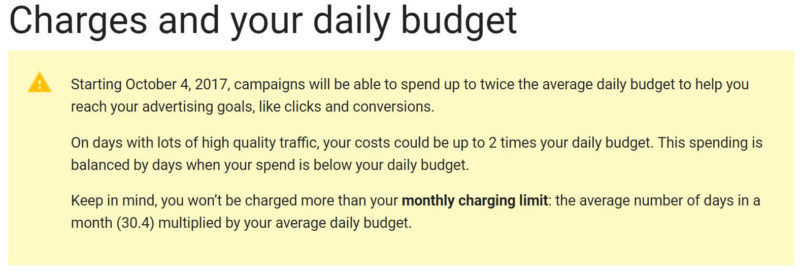
In the tweet, Google announced, “To help you hit your advertising goals, your campaigns can now spend up to twice your average daily budget.”

Say what?

The link leads to the broader notice that the change took effect Wednesday, and is not optional.

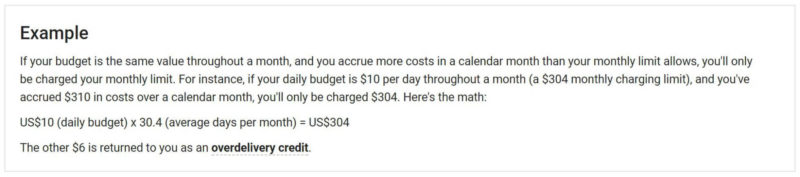
What gets lost in the tweet, which reads like something from The Onion, is that that advertisers “won’t be charged more than your monthly charging limit: the average number of days in a month (30.4) multiplied by your average daily budget.” That is obviously key. To reiterate: advertisers will not be charged for any overages above the expected monthly budget that come from this change.

The concept behind this change actually makes a lot of sense: that campaigns will be better equipped to account for lulls and spikes in daily activity. And, this is something Google has long been doing, just at a much lower increment. Before this update, campaigns could spend 20 percent more than the daily budget on a given day, but overall wouldn’t exceed the calculated monthly budget.

Why oh why does AdWords only have daily budgets?

The real question to me isn’t about the loss of control in yet one more area of campaign management, but why is daily still the only budgeting option? Why, particularly with this change forced on advertisers, isn’t there an option to set a monthly budget or a budget for the duration of the campaign if it has a fixed run time? That’s how budgets get allocated, and that’s how managers are expected to operate. Daily bid adjustments don’t address this issue. And usually the reason daily budgets get adjusted — resetting Google’s monthly charging limit — is because advertisers see that campaigns are under or over performing.

At the end of the month, advertisers want to have had the opportunity to get as many qualified clicks and conversions as possible within their given budget. A daily budget is really just a limitation advertisers are forced into by having to allocate a monthly budget evenly throughout the 30-day period. But Google’s change here — that daily spend could exceed the budget by “up to 2 times” — is also arbitrary. What if it turns out there are a handful of days when it would benefit the advertiser to triple the daily budget, knowing there are days that will spend a fraction of the daily limit?

Ideally, if Sunday was a particularly slow day and my campaign only spent $200 of the $300 budgeted, I’d want the system to automatically roll over the unspent $100 to be available Monday and allow the campaign to spend up to $400 that day. That’s not quite what’s happening here. How can advertisers know that their campaigns aren’t being throttled after multiple days of heavy overspending, for example?

Overdelivery credits

With overdelivery credits, maybe it doesn’t matter. “Sometimes we deliver over your monthly budget. In those cases, we’ll credit the overdelivery cost back,” says Google. This is the measure that should help advertisers feel a bit better about the change. Advertisers can see overdelivery by day from the Reports section in AdWords.

Google clarifies on this page that it considers monthly budgets to be calendar month budgets and not a rolling 30.4 day period. That’s good. The over delivery credits will show up in an advertiser’s transaction history once they are processed and show up on the invoice once a month.

see more here

This Elastic Glue Can Seal Wounds In Under 60 Seconds

check out this post on This Elastic Glue Can Seal Wounds In Under 60 Seconds

A highly-elastic glue could be the future of treating wounds inflicted in car accidents or war zones, after it was shown to successfully seal open incisions in less than one minute.

The “potentially life-saving” MeTro gel, which is just administered directly to the site of the injury by squirting it from a syringe, could transform the way surgery is performed by negating the need for common staples and sutures.

Professor Anthony Weiss said: “The potential applications are powerful.”

Elastagen Pty Ltd

A team of biomedical engineers, from the University of Sydney, developed the adhesive substance, which is similar to silicone sealants used around bathroom and kitchen tiles, according to Professor Weiss.

Once applied to the area, it is treated with UV light and sets within 60 seconds.

It is also at this stage that it can be treated with a built-in degrading enzyme that can be modified to determine how long it lasts (between hours and months) before disintegrating. Unlike stitches that would have often required removal.

Once it has degraded, there is no signs of toxicity left in the body.

Elastagen Pty Ltd

So far it has been most useful for sealing wounds in body tissues that continually expand and relax, such as lungs, heart and arteries, that are otherwise at risk of re-opening with classic methods of stitching.

It also works on internal wounds that are often in hard-to-reach areas and have typically required staples or sutures due to surrounding body fluid hampering the effectiveness of other sealants.

Elastagen Pty Ltd

check out original

Programming Note: Offline For Sukkot

i wish you like this article on Programming Note: Offline For Sukkot

I will be offline completely for the holiday of Sukkot/Succos on October 5th and October 6th and the following week, October 12th and October 13th. Any stories published here will be scheduled and written beforehand and not posted live.

link to main source

This Elastic Glue Can Seal Wounds In Under 60 Seconds

check out this post on This Elastic Glue Can Seal Wounds In Under 60 Seconds

A highly-elastic glue could be the future of treating wounds inflicted in car accidents or war zones, after it was shown to successfully seal open incisions in less than one minute.

The “potentially life-saving” MeTro gel, which is just administered directly to the site of the injury by squirting it from a syringe, could transform the way surgery is performed by negating the need for common staples and sutures.

Professor Anthony Weiss said: “The potential applications are powerful.”

Elastagen Pty Ltd

A team of biomedical engineers, from the University of Sydney, developed the adhesive substance, which is similar to silicone sealants used around bathroom and kitchen tiles, according to Professor Weiss.

Once applied to the area, it is treated with UV light and sets within 60 seconds.

It is also at this stage that it can be treated with a built-in degrading enzyme that can be modified to determine how long it lasts (between hours and months) before disintegrating. Unlike stitches that would have often required removal.

Once it has degraded, there is no signs of toxicity left in the body.

Elastagen Pty Ltd

So far it has been most useful for sealing wounds in body tissues that continually expand and relax, such as lungs, heart and arteries, that are otherwise at risk of re-opening with classic methods of stitching.

It also works on internal wounds that are often in hard-to-reach areas and have typically required staples or sutures due to surrounding body fluid hampering the effectiveness of other sealants.

Elastagen Pty Ltd

check out original