How to Leverage Behavioral Analytics In Your Growth Strategy

this is a article on How to Leverage Behavioral Analytics In Your Growth Strategy.

Be sure to view the entire note and view the original site

If you’re obsessed with growth, you know how important it is to have a super detailed growth strategy. You and data are BFFs, right? Great, but you also need to understand the context that surrounds that data.

I know that sounds a little dense, but bear with me. What I mean is that information alone isn’t enough. Yes, in data we trust. Sure, lots of metrics are all well and good, but if you can’t leverage that data, there’s no point to it. Think about it. Who makes the growth happen? You might think it’s you, but in the end, it’s actually your audience.

How your users respond to your tactics will decide how successful your growth strategy is. So take a step back and look at your audience. Do you really understand them? Be honest with yourself. Most growth hackers think they understand their customer base, but they only know raw data. Knowing demographics doesn’t mean you understand your audience.

This is where I drop my bomb of a topic. Behavioral analytics, folks.

Understanding and applying behavioral analytics can be incredibly useful for growth strategies. In fact, it could be the energy and edge that your brand has been missing.

Want viral growth? Say hello to behavioral analytics. These analytics give you a look into the minds of your users so you can put yourself in their shoes. You’ll be able to build targeted campaigns that better suit your audience, create messages that reach the right users at the right time, and attract entirely new user bases.

I realize that “behavioral analytics” doesn’t sound all that sexy, but you’re going to discover just how powerful it is. Let’s take a look at some fundamental concepts of behavioral analytics that you absolutely need to know and then explore some actionable strategies you can use.

If you’ve been sleeping on behavioral analytics, it’s not too late. Read this article. Do what it says, and your brand will grow.

What Psychographics Are (and how you get them)

When it comes to behavioral analytics, psychographics are vital.

Psychographics provide a foundational understanding of why your customers behave the way they do.

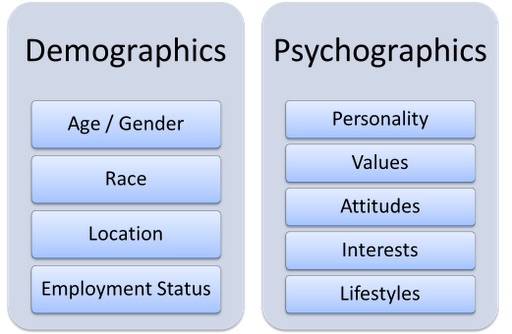
Demographics are the who. Psychographics are the why.

Each psychographic is a data point that tells you something about your users’ behavior.

Here’s a more comprehensive list of psychographics:

Image Source

These go way above and beyond demographics to give you a fuller picture of your audience.

Psychographics clue you in to your users’ behaviors. For example, if you know that most of your audience is composed of parents of 5-11 year olds, you’ll understand why those kid-sized T-shirts are flying off the shelves.

Although you can’t get any super specific data like number of clicks, you still need psychographics to get a general idea of how your audience acts and why they do what they do.

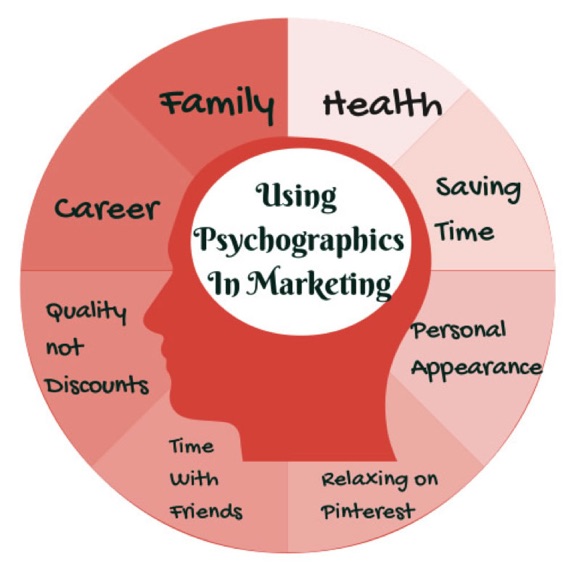
Psychographics will often reveal what’s important to your users.

Image Source

Do you understand now why psychographics are so important? They help you see your customers as people and not just information from your analytics software.

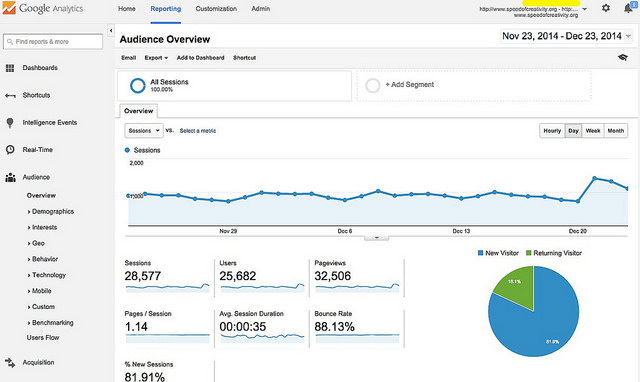
Speaking of analytics software, you can find some basic psychographic information in GA by heading over to Audience > Interests > Overview.

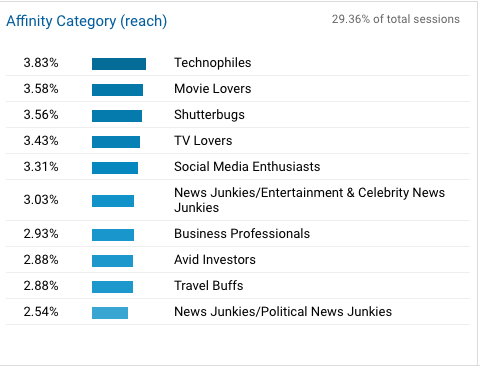
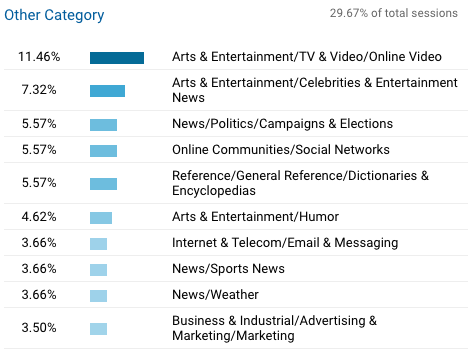
You’ll see three categories: Affinity Category, In-Market Segment, and Other Category.

The Affinity Category shows you different lifestyle categories. Google compares these groups to TV audiences.

This category points to specific interests that your users have. Even if you just look at this section of GA, you can get a pretty good understanding of what your audience likes.

The In-Market Segment shows you what types of products your users have shown interest in.

Basically, your customers are looking to buy products or services within these categories.

The Other Category offers a narrower view of your audience.

demographics category google analytics

If you want to go even deeper, Google has a handy guide on using this psychographic info in conjunction with other analytics.

There are many other ways to grab psychographics, from surveys to focus groups. Use as many of these methods as you want. Too much psychographic data is never a bad thing.

Still, psychographics are just that––data. You need to use them in a creative way.

With that in mind, let’s look at some growth techniques that depend on psychographics and other behavioral data.

Data-Driven Customer Personas

Creating an imaginary friend might sound a little childish to you, but that’s essentially what you need to do with psychographics.

Right, I know, it’s not exactly an “imaginary friend.”

I’m talking about creating a fictional person who is a representative of your audience base and not just some creature you made up. These representatives are otherwise known as customer personas.

You’re probably familiar with the idea of the customer persona, but if you’re not, don’t worry. Here’s a brief rundown.

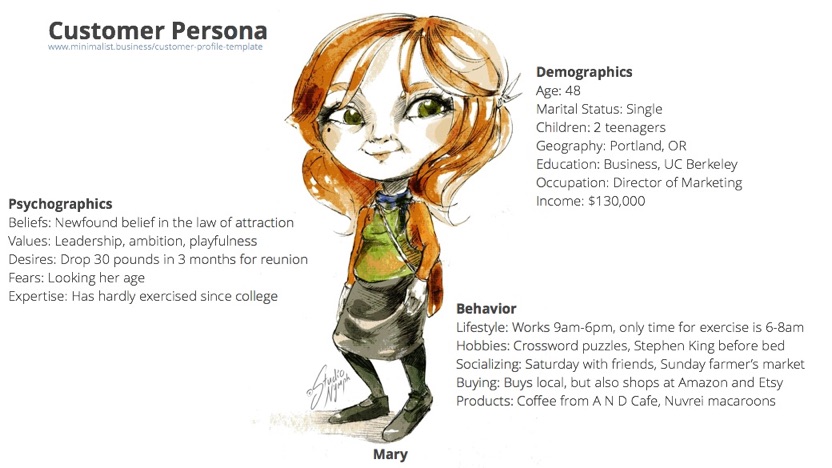
A customer persona (also called user or buyer persona) takes aggregate data and uses it to create a fake person. This person is your average customer.

His or her demographic and psychographic information is representative or your audience (or a segment of your audience).

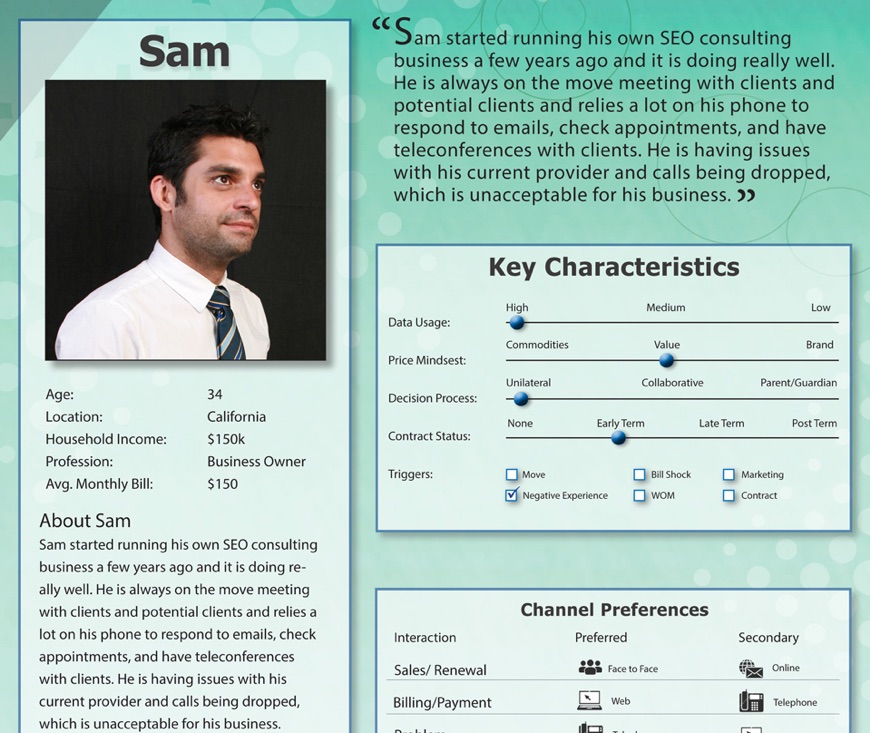
Here’s what an example customer persona might look like:

customer persona

Image Source

As you can see, you can get really detailed with personas. The more detailed they are, the better you’ll understand your users.

By definition, a customer persona is chock full of behavioral analytics. They help you describe the persona in detail.

Once you have all of your behavioral analytics together, you can take a couple of different approaches to creating a persona.

The approach you take will depend on what you want to accomplish with your personas.

Do you want to create better email sequences? Do you want to improve your Facebook ads? Think about your objectives as you create your personas.

Image Source

Specifically, you can use certain analytics based on the results you’re after. Let’s look at some examples of this idea in action.

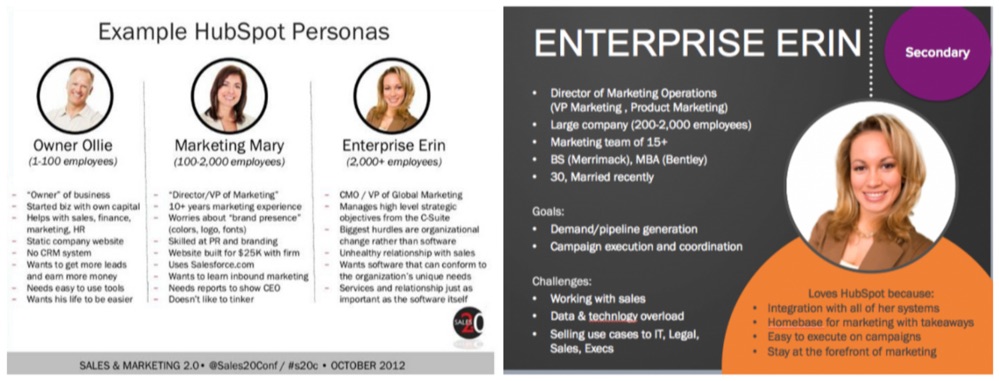
Let’s say you want to redesign your CRM software to attract more leads. In terms of analytics, you’d want to look for business-related psychographics.

These might include the user’s role at work, how much time they spend at their job, or even the search terms they use to get to your site.

So an example persona for that would look like this one (the one on the right side):

This persona is great for SaaS because it uses analytics that relate to work. There’s little personal information here, but there’s enough to give you an idea of who the persona is.

But that type of persona isn’t ideal for every sort of situation.

Another example: Say you’re the head of growth at an ecommerce apparel startup.

You’d be more concerned with personal behavioral analytics and not so many work-related data. So a persona for you might look something like this:

Image Source

The types of analytics you use should all depend on your goals and the kind of product or service you’re selling.

It doesn’t hurt to get as many data points as possible, but you’ll want to refine them to zoom in on your average customer.

Creating a persona doesn’t take much time, but it can change how you see growth. That said, you have to make sure your personas are as accurate as possible.

If you get the wrong analytics, well, your entire customer journey might just go down the drain.

But if you get it right, your customers will feel like you really know them.

This is a perfect example of how behavioral analytics can make all the difference in your growth strategy.

Remember, you’re not simply looking at a bunch of random numbers. This information has real uses that you can take advantage of starting today.

Let’s take a look at another one of those advantages.

Customer Segmentation

You’re segmenting your users…right?

Okay, maybe you’re not. That’s okay. But you totally need to be.

Some marketers and growth hackers see their audience as one big mass, so every campaign gets sent out to everyone.

But not everyone has the same needs and wants. Your customers are all different.

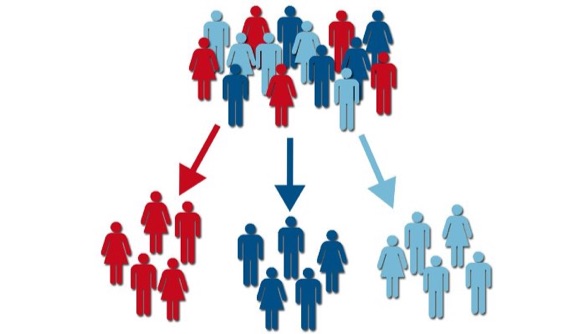
So if you group people into similar segments, you can deliver more accurate, targeted messages and have better results.

That’s why segmentation is part of every good marketer’s (and growth hacker’s) playbook.

And––you guessed it––behavioral analytics can help you segment better.

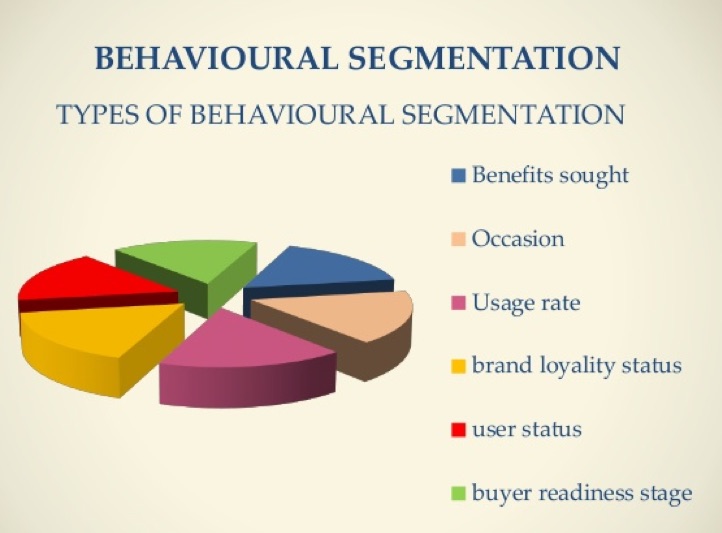
The basic idea is to create segments using one or more behavioral attributes.

If you group generally according to behavior, you’ll get an inside look into what different types of customers are looking for.

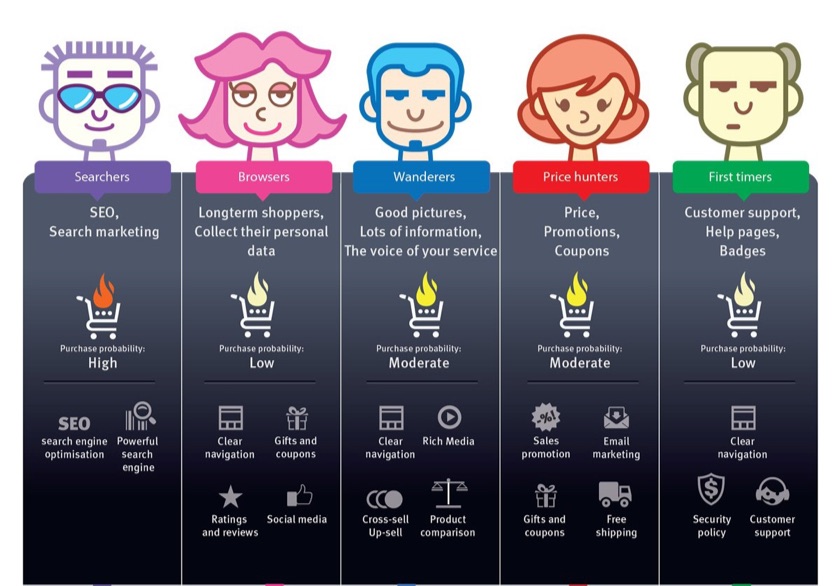
Image Source

Just this basic behavioral segmentation already gives you a much better understanding of the different kinds of users you have.

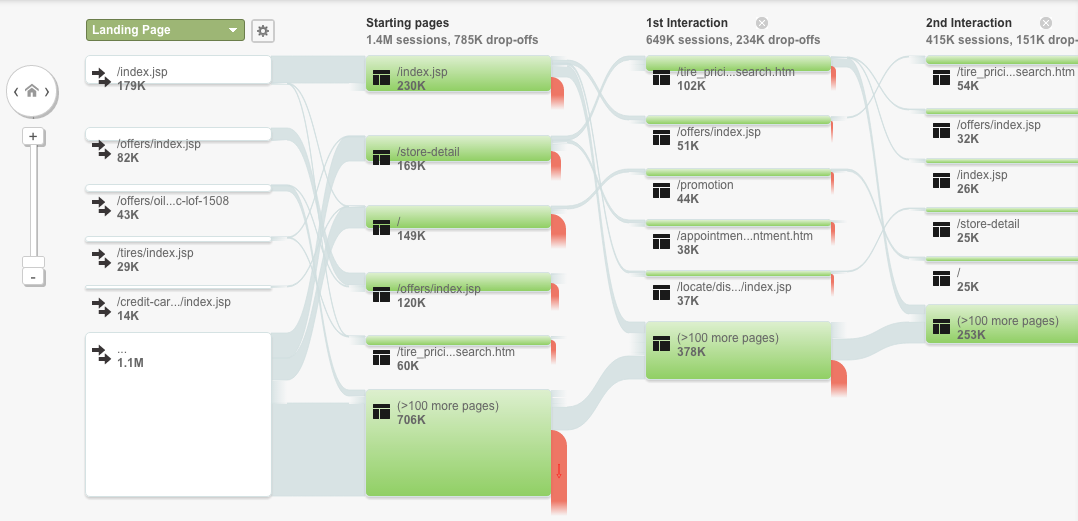
All you need to do is a little behavioral research to get started with this. In GA, you can go to Behavior > Behavior Flow to see an overview of the average user path on your site.

While this isn’t incredibly comprehensive, it can prep you for actual segmentation later on. Odds are the trends you see on Behavior Flow will reflect your audience as a whole.

This type of segmentation is flexible and can be used in a variety of ways.

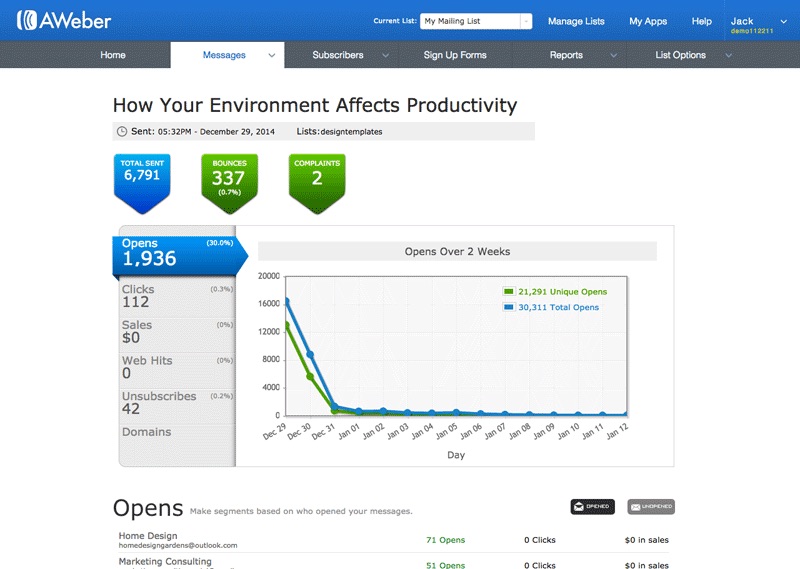
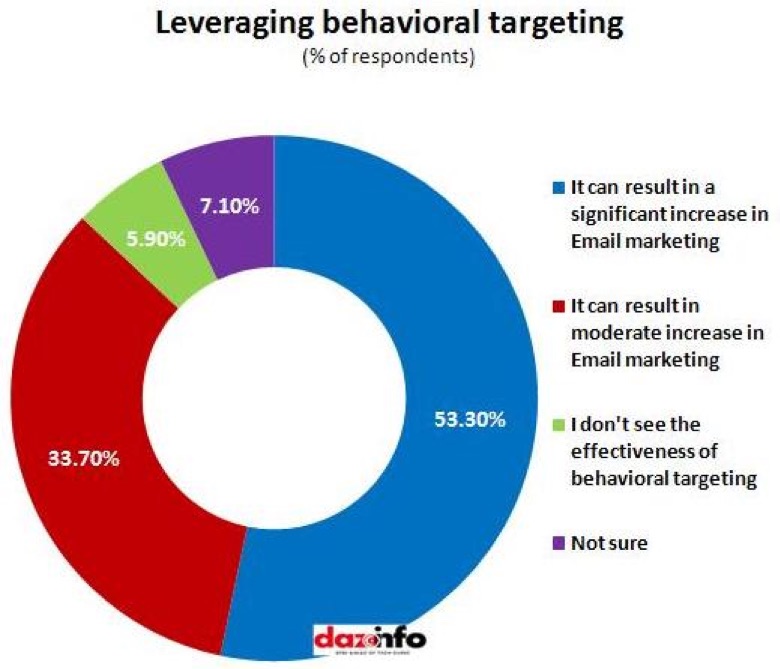
Take email marketing. You can see what emails people open, which people almost never open your emails, and maybe even how long a user spends reading your email.

You probably look at data like this all the time:

Image Source

But have you considered that you can use this information to tap into your subscribers’ brains?

All of those are behavioral analytics in their own right, and they’re great for segmentation.

There’s a lot you can do with these analytics. You can send a special discount email to the loyal subscribers who regularly open your emails, or you can send more targeted emails to people who tend to open one type of email.

And your results are almost guaranteed to improve.

Image Source

The possibilities are endless.

And if you’re using Kissmetrics, you don’t have to worry about any of this because the behavior-based delivery feature does it for you.

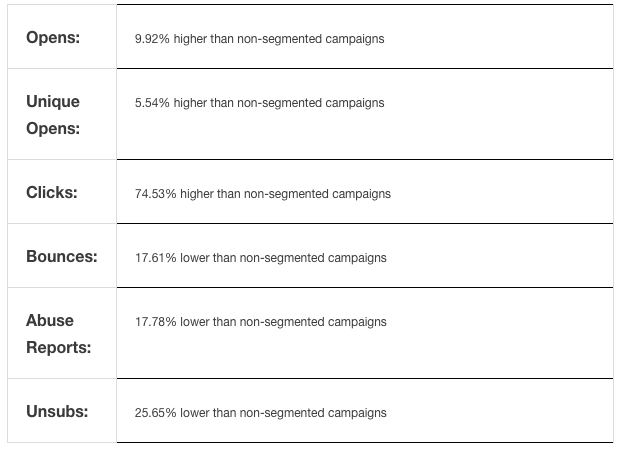
Still in doubt? I know it sounds like a lot of work, but it really isn’t, and it can pay off big time.

MailChimp found that segmenting subscribers by interest made every metric soar:

Image Source

If you’re willing to get even crazier with segmentation, get ready.

You can also use behavioral analytics to group your customers by their place in the customer journey.

This concept is a little more advanced than the techniques we’ve gone over, but it packs a serious punch.

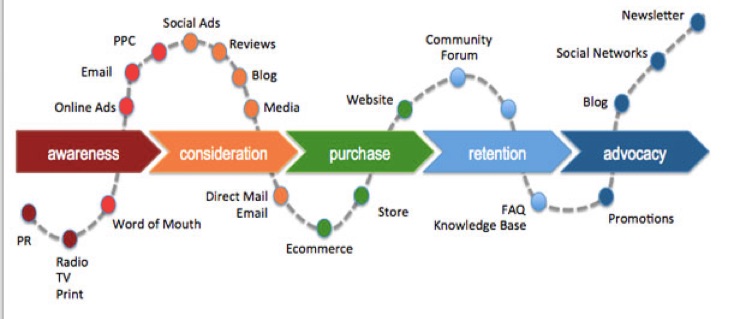
The typical customer journey is more or less like this:

Image Source

By using behavioral analytics, you can find out what stage of the customer journey a user is going through.

Behavior Flow can often show this. If someone has checked out lots of your product pages but hasn’t made it to the checkout, he or she is in the consideration stage.

Once you’ve found out where someone is in the customer journey, you can place him or her into an appropriate segment.

Image Source

This approach is a growth hacker’s dream. Not only can you segment your customers, but you can also get a better grip on the customer lifecycle.

It’s awesome, isn’t it?

If you’re serious about converting and growth, you should strongly consider this advanced tactic. It’s one of the best ways to hyper-focus your messages, and you’ll reach the right users at the right time.

Conclusion

Growth is all about people.

And by people, I mean your users.

A good growth strategy has to be centered around your customers. Otherwise, your strategy will fall flat on its face.

If you’re focused on sheer volume and ignore your customers in the process, you’re going to get nowhere fast.

Analyzing and leveraging your users’ behavior is one way to enhance your current strategy.

If you understand your users’ behavior, you can more easily determine what kind of content they want and what kind of messages are best to send to them.

Like I said, it’s all about people. We want to be understood, and we want our needs to be taken care of.

As a growth nut, it’s your job to make sure that happens.

I hope you enjoyed this article on How to Leverage Behavioral Analytics In Your Growth Strategy

View original article here

An integrated approach: From SEO to PPC and beyond

See details of post An integrated approach: From SEO to PPC and beyond below

For most businesses, the summer season means a slow-down in industry events — but for digital marketers, there is no rest! My company was out in force at both The Turing Festival and BrightonSEO this year, both of which represent fantastic forums for knowledge-sharing and networking.

Reflecting on what were hugely insightful conferences, I’d like to run over themes that stood out to me — and how digital marketers can put insights drawn from them into practice.

Attendees of both conferences were spoiled for choice: Speakers from the world’s largest and most inspiring companies, including Google, Moz and Skyscanner, headlined stages. Members of our paid search team were particularly wowed by the session delivered by Wil Reynolds, the founder of Seer Interactive.

Breaking down silos

Wil Reynolds’s background commanded the audience’s attention from the get-go with a story that is still relatively unusual in the marketing world. Originally an SEO expert who turned to PPC, Reynolds suggested that the notion of switching between elements of search marketing shouldn’t be unusual in 2017, but that it unfortunately still is.

Typically, search professionals specialize in either paid or organic search and rarely move from one to the other. However, combining these skill sets can strengthen a marketing team and add value to the services it delivers to its clients.

I think that’s an important lesson for marketers, whether agency or client-side. Integrated marketing strategies are more effective than siloed efforts, and we have no shortage of case studies to that effect here at QueryClick.

Describing how he broke out of his own silo and combined SEO with PPC, Reynolds highlighted how the two areas of search complement each other — a message that resonates with me personally as a marketing professional who recognizes that an integrated approach delivers the strongest results.

A holistic approach

In a modern digital marketing world, however, the merging of skills goes far beyond mastering both SEO and PPC. The way people consume content has drastically changed over the last decade. The rise in mobile media consumption has led to a diverse range of content platforms, and marketers now have extensive opportunities to tailor their messaging and reach their target audiences.

To ensure consistency across platforms, today’s brands demand an integrated approach with a cross-skilled team that breaks down silos, produces more meaningful data and offers them more bang for their buck.

Running organic and paid search campaigns simultaneously (with a single point of truth in reporting) allows integrated marketing teams to define the keywords that have the highest conversion rate and therefore determine the themes that will optimize a brand’s overall digital marketing strategy. To work effectively, however, it must be rolled out across SEO, PPC, social media, PR and conversion rate optimization (CRO), with each team working closely together in order to achieve the brand’s end goals.

Bridging the gap

Of course, there are risks to adopting an integrated approach. There can be a huge disconnect between PPC and SEO campaigns, for example, and work must be done to bridge the gap between both disciplines. Ensuring that the work of the SEO and PPC teams complement each other, and that they can yield valuable data and insights for that work, should result in campaigns that are more targeted and relevant to the brand’s audience.

I’ve written before about how you can integrate paid and organic search behaviour in a blended “Halo” report, and I think it’s just one example where integrating channels provides significant insight value to both channels.

Of course, creating an integrated strategy is an art form as much as it is a science, and without the appropriate tools at hand, it’s not always possible. Power BI, a data visualization tool which can pull deeper integrated organic and paid metrics together, can help marketers present a visual representation of PPC and SEO activity live, allowing both teams to move away from working and reporting in silos and allowing an instantly accessible “single point of truth.”

Get the full picture

During the conclusion of his session at The Turing Festival, Reynolds pointed out that it is important to recognize that SEO and PPC look at the world differently. He described PPC professionals as being akin to “creative accountants,” working to meticulous precision, and suggested that SEOs are more like “poker players,” keeping their cards close to their chest.


Google Search Algorithm Update On September 16th

i wish you like this post on Google Search Algorithm Update On September 16th

Google Algorithm Update

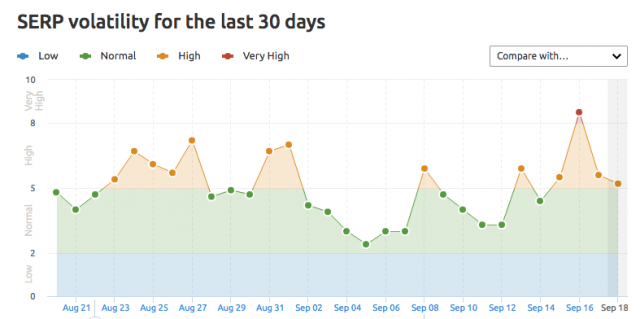
I was incredibly tempted to do a special alert news story Saturday night on a Google algorithm update that seems to have touched down Saturday morning or late Friday but I decided to see how the Sunday chatter around it would be. In short, I noticed an unusual number of people complaining about the Google search results in the ongoing WebmasterWorld thread and some on Black Hat World starting early Saturday.

But Sunday and this morning, the chatter significantly died down. Some say whatever happened Saturday morning, it reverted back the next day. We have seen this before, it may have been a bug or something else but the chatter has 100% died down a lot.

Here is some of that Saturday chatter:

Thing are looking strange today, my bounce rate is up, and my page per session are down, Traffic is down marginally, too early to know for sure if it is significant. This after a few weeks of slowly but steadily growing traffic.

We’re seeing a strong increase yesterday and today (compared to the same days last week), but it’s probably because of the big, big increases in Texas and Florida traffic now that the hurricanes have moved on. (Florida is running 122 percent ahead of last Saturday, for example, and the day isn’t over.)

Things Reverted to poor traffic on FRIDAY 15th and SAT SUN.. so whatever happened has gone back to #@$ now. =/

Total drop in traffic with sessions down over 20% on the week. Must be that “anomalous” overshoot of 4.3 clicks that triggered the hammer. Over the week, data insights were all sunshine and unicorns, yet end of week tally is a loss. smh – perhaps it was the hurricane murmuration. lol

Yes, most of the tools also went nuts on or around Sunday. Here are screen shots:

Mozcast:

click for full size

SERP Metrics:

click for full size

Accuranker:

click for full size

RankRanger:

click for full size

SEMRush:

click for full size

Algoroo:

click for full size

And now that Google says these tools are often right – and we have webmaster chatter – maybe something went wrong on Saturday with Google’s search algorithms?

Feel free to visit this post on Google Search Algorithm Update On September 16th any time

url to original source

Google Search lets readers find e-books at their local libraries

See details of post Google Search lets readers find e-books at their local libraries below

Google just made it easier for readers to find an e-book at their local library.

Per the following tweet from Google, mobile search results for a book now include a “Borrow e-book” option under the “Get Book” section.


Setting Your Customer Engagement Emails on Automation Using Kissmetrics

Here is a article on Setting Your Customer Engagement Emails on Automation Using Kissmetrics.

Be sure to read the entire essay and view the original source

Human attention spans are embarrassingly bad.

I’d be lucky to get just 5% of people to read this entire post. Most probably won’t get past the intro, so I’ll get to the point:

In this age of infinite distraction, brands that can keep their customers engaged with the product are bound for long-term success.

Fads come and go (by definition) and companies have short lifespans. Here one day, closed (or acquired) the next.

Brands that will succeed are the ones that keep customers engaged and re-purchasing.

Companies like Netflix, Facebook, and Amazon succeed, in part, because they keep users engaged. Netflix keeps producing great content, which keeps people coming back. Facebook has a great, addictive product that billions of people use everyday, and Amazon has made billions off keeping customers to come back and make more (and more) purchases.

To keep customers engaged, they’ll need to be informed on what they’re missing without you. To do that, you can send behaviorally-targeted emails towards the relevant group of users.


Here’s how to spot your unengaged users, and get them re-engaged. And this is all done with Kissmetrics.

Just What the Heck is an Unengaged User?

Before we dive into the hows, we’ll first need to know what an unengaged user looks like.

There are active users and there are engaged users.

Active means they have logged in. Even if they login, stare the screen for a few minutes, and leave they can be considered active.

An engaged user is one who uses the product in a meaningful way. They use features, comment on statuses, send messages, and share photos.

Each product will have different conditions of what makes an engaged user, but one thing is for sure – they need to be using the product and interacting with it, not just logging in.

We’ll use a SaaS company as an example in this post. And we’ll set our definitions of unengaged and engaged customers:

  • Engaged – Has used at least 3 features 4 different times in the last 7 days.
  • Unengaged – Has not used any feature the past 14 days.

Now that we have our definitions, we’ll monitor our unengaged users using Kissmetrics Populations and then target them using Kissmetrics Campaigns.

Monitoring With Populations

Populations was created for growth/marketing and product teams to help them keep track of their growth cycle. With just a few clicks you’ll be able to monitor the KPIs that matter to your company.

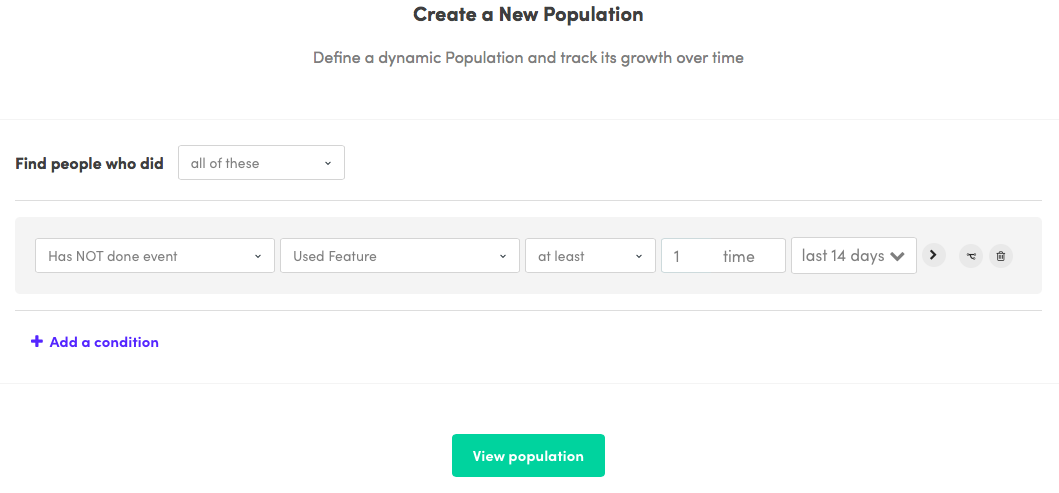
For this post, we have to goal of shrinking our unengaged user base. So we’ll create Population that tracks the users that have not used any feature in the last 14 days.

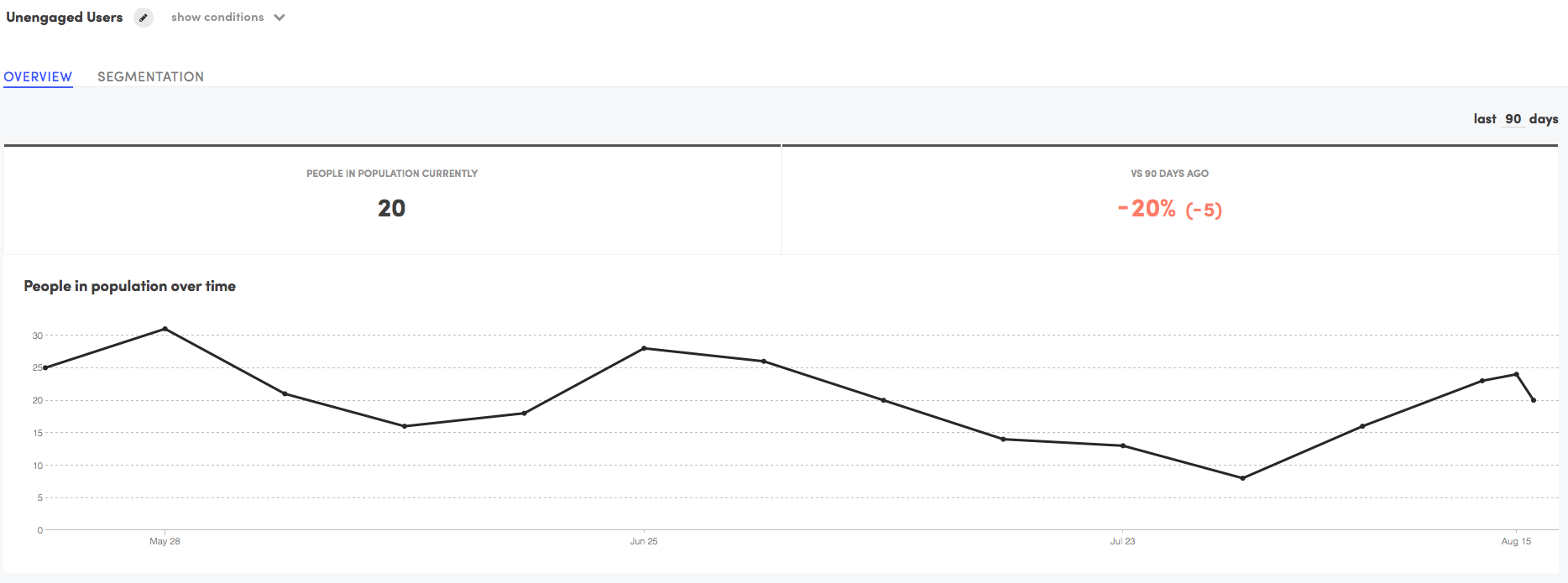
Let’s see how many users are in this Population:

So we have our Population in place. Since these are our unengaged users, we’ll want to reduce the number of people in this Population. Let’s take our first step by creating a Campaign.

Send Behavior-Based Email Messages Using Campaigns

Campaigns is one of my favorite features in Kissmetrics. Once you find a segment of users that need to be nudged – whether it’s toward conversion, using features, logging in, etc. – you pull up Campaigns and create the perfect email to nudge them.

There are a number of things you can use Campaigns for. In this case, we’re using it to get our unengaged users in the product and using the features.

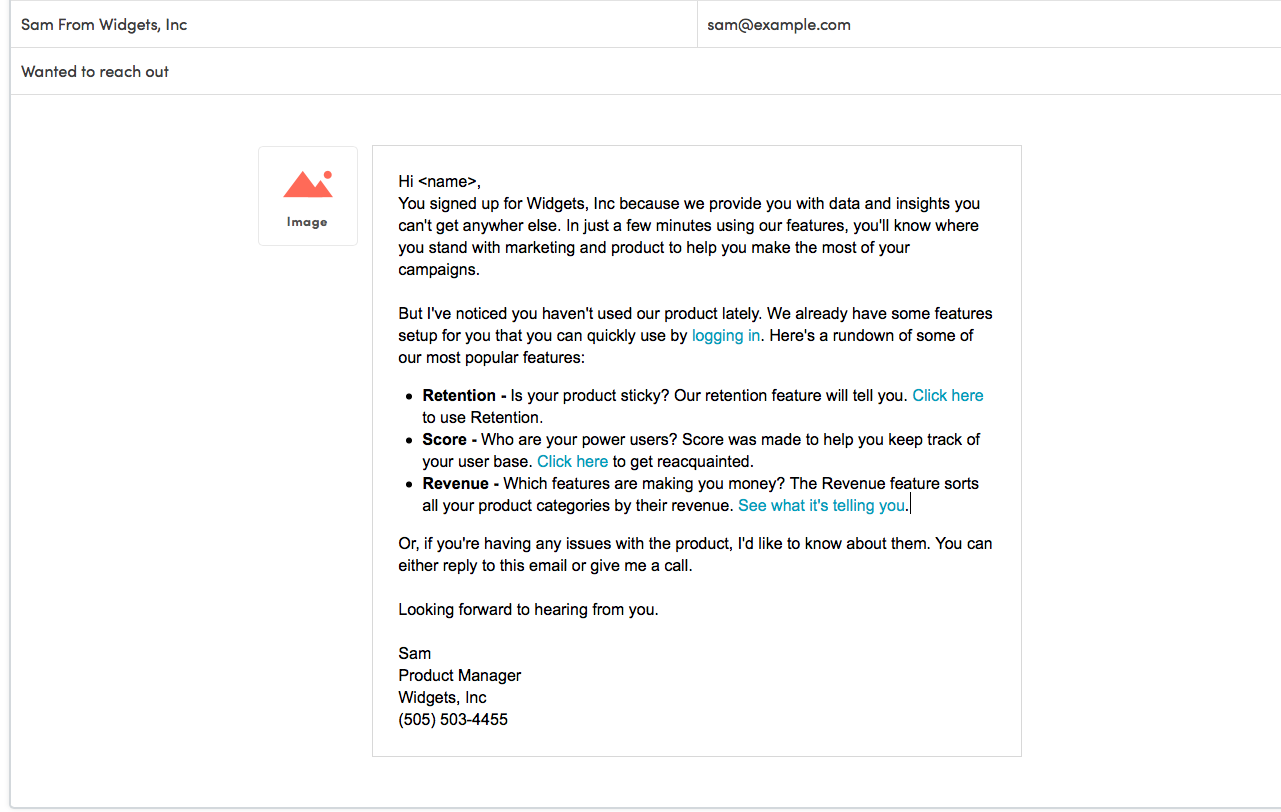
In Campaigns, we’ll create a new email message:

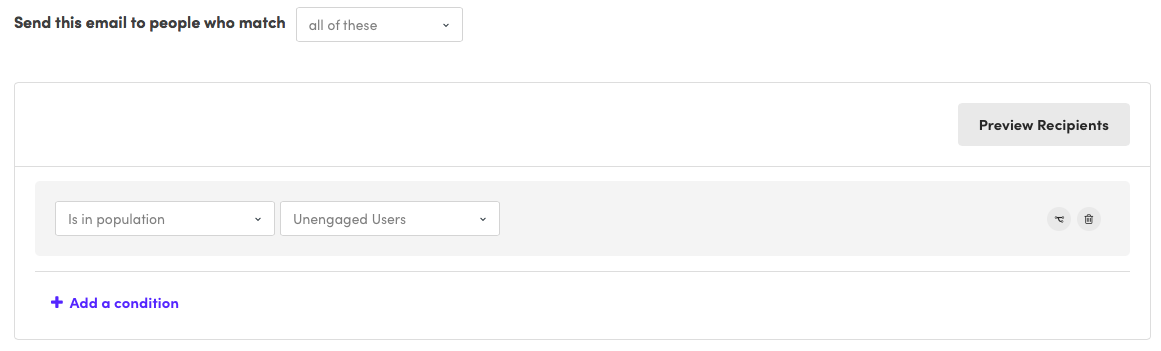
And we’ll target the people in the Population we previously created:

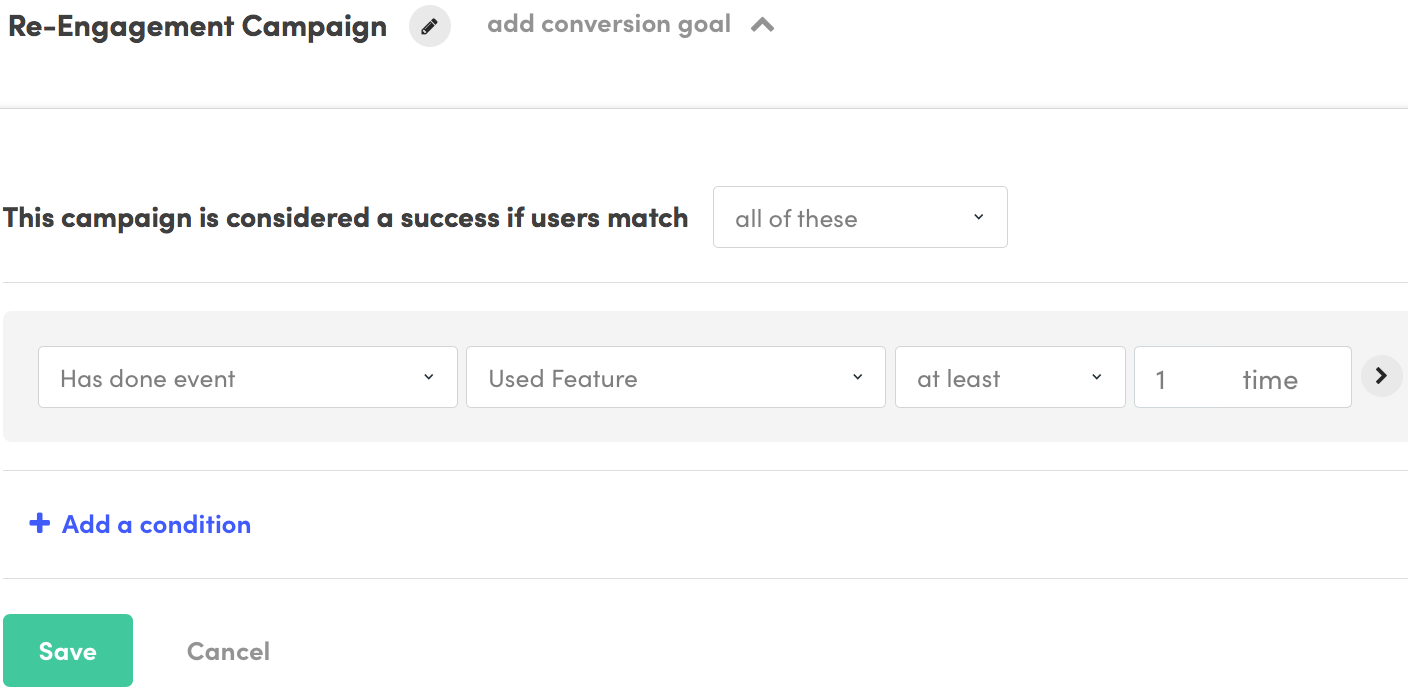
We’ll then set our conversion goal. This means that we determine if the Campaign is successful if the users do a specified event. For us, that event will be Used Feature.

We’ll then track the results in Campaigns, where it’ll say how effective the Campaign has been. Here are the results from a different Campaign:

And we can’t forget about Populations. Once we have our Campaign running, we’ll check the Population to see if it’s growing (bad) or shrinking (good).

Minor Interruption

Prefer to just watch our promo videos for Campaigns and Populations? Just hit play below – let’s start with Populations:

And Campaigns:

Conclusion

No matter how sticky your product, there will always be a group of unengaged users.

Even the ultra-addicting Facebook gets unengaged users.

And how do they bring them back?

Through emails.

Don’t believe me? Just get off Facebook for a few days (if you can) and you’ll eventually receive the barrage of emails that come like clockwork.

New friend suggestions, did you see person’s comment person’s status, person added a new photo, and you have 99 notifications, 5 pokes, and 3 new friend requests.

All designed to get you sucked into back and using Facebook once again.

I hope you enjoyed this article on Setting Your Customer Engagement Emails on Automation Using Kissmetrics

View original article here

If Earth Was Even A Fraction Further From The Sun It Would Be Completely Unrecognisable

check out this post on If Earth Was Even A Fraction Further From The Sun It Would Be Completely Unrecognisable

Earth is already a statistical anomaly, something that at present shines out as a blip on the norm of space.

Well a new study looking into the atmosphere’s of exoplanets has revealed just how lucky we really are.

The team from Sorbonne Universitiés has found that were Earth to be just the tiniest amount further from the Sun it would be an unrecognisable, inhospitable ball of ice locked into a permanent ice age.

Lucas Jackson / Reuters

Led by Martin Turbet, the team examined how CO2 would react in planets that were slightly closer or further away from their host stars. What they found was that even a small adjustment further away would cause the CO2 to condense at the poles forming permanent ice caps.

Without any CO2 entering the atmosphere this would drastically alter the greenhouse effect and in turn would fail to warm up the planet’s atmosphere.

What’s worse is the team find that this situation would only get worse if the amount of water ice increased. The CO2 would become trapped under the water ice, permanently, resulting in a planet that would be stuck in a never-ending ice age.

Earth then is in just the right place. It isn’t too far away that its CO2 has been trapped in the ice and yet it’s not too close that the greenhouse effect went into overdrive and the planet became too hot.

Studies like these are vital in helping researchers better analyse exoplanets, some of which have previously been found to fall into what has often been called the ‘Goldilocks Zone’. A window within which planets are capable of forming life-sustaining atmospheres.

So far the number of planets discovered by the Kepler space telescope to a whopping 4,034, 50 of which have been confirmed as being Earth-sized and located within the habitable zone.

Kepler discovers new planets by observing the minuscule drop in brightness that occurs when a planet passes in front of its star.

I hope you enjoy this writeup on If Earth Was Even A Fraction Further From The Sun It Would Be Completely Unrecognisable

see original

Homepages Rarely Convert Because These 6 Elements Are Often Ignored

this is an note on Homepages Rarely Convert Because These 6 Elements Are Often

Ignored.

zamenjeno

Be sure to read the entire essay and view the main source

No, this headline isn’t clickbait.

This article does contain critical homepage elements that are often overlooked. And you might be ignoring them. In fact, the examples I share here are a sure sign that many marketers still ignore critical homepage elements. And conversions are lost for these simple reasons.

I’m not going to rehash what you already know about homepages.

You are a smart marketer. You already know a homepage is your website’s front door. It’s where most of your customers expect to find the #1 thing you do that can solve a specific problem for them.

Okay, enough talk. Here are six homepage elements you’re probably overlooking that are costing you conversions:

1. Homework (a.k.a. doing customer research)

Homework ‘on people’, that is. And yes, it’s a homepage element—because it shows when you do it well.

Imagine this for a second: Your high school teacher assigns you homework and asks you to submit it in three days. For the next two days, you stay up late and wake up early to deliver your best. You faithfully turn in your homework on the third day.

Question: How long would it take your teacher to score your work? A few seconds to five minutes. That’s how long it will take to score something you worked on for days.

It’s the same with your homepage. Your homepage (or even any landing page for that matter) is like homework given to you by your target audience. It takes them a few seconds or minutes to score you, before deciding to bounce or stay.

Homework shows on your homepage—because, if you do it, your copy will be saying what your prospects want to hear. If they land on your page and find that you’re not speaking their language, it shows you haven’t done your homework, and things can get ugly. You may even leave such a bad impression that they make a point of not going back.

Example, Ashdown People—a firm specializing in HR for IT businesses:

If you’re a tech firm who visits this page for the first time, here are a couple of questions you’d naturally have in mind:

  • What does Shaping The Digital And Technology Workforce mean?
  • How are you shaping it?
  • What’s the exact HR problem that this brand solves for IT organizations?

The page looks nice, but imagine the confusion its visitors may be experiencing.

In contrast, take Solertia — another HR firm:

Their homepage copy speaks directly to a specific challenge folks running HRs face—developing compensation strategies to avoid losing key talent. This will catch the attention of an HR pro because it deals with problems that hurt and offers a solution.

This is a good example of someone doing their homework. Whoever wrote this copy studied their audience well enough to find that ‘developing strategies to keep key players in an organization’ is a goal HR departments always try to reach.

Doing your homework on your target audience reflects in your messaging.

How do you do your homework? Talk to the very people that visit your homepage: customers. In other words, get feedback. There are great tools that will help you here, some of which include:

  • SurveyMonkey: Create surveys and generate quality feedback.
  • Kampyle: Get feedback from users.
  • Get Satisfaction: Build a forum where customers talk to one another about your product, while you just watch, listen and act accordingly.
  • AnyMeeting: Schedule live meetings with customers and get actual feedback from them.
  • IdeaScale: Allows users to make and vote suggestions about your product. And feedback with the most interactions gains higher recognition than others.

These tools will help you know your customers’ pain points, goals and how they will need your product to solve their problem. Then, you’ll be able to create a homepage (and even any other landing page) that speaks directly to those problems.

Next, brevity and clarity.

2. Brevity and Clarity

Brevity doesn’t necessarily mean copy is short. It does imply there are no redundancies, and yet enough clever repetition to convince visitors to take a specific action.

Chris Garrett, Chief Digital Officer at Rainmaker Digital, wrote that a landing page should be, “as long as necessary. And no longer.”

That’s brevity. As long as necessary. No longer. And clarity, on the other hand, is self explanatory enough. Is the problem you solve for your audience crystal clear?

When your homepage doesn’t briefly and clearly explain your offerings, people lose interest. It’s that simple.

Another case in point is where you have brevity on your homepage, but not clarity—a case where your homepage copy is brief, but it isn’t clear how visitors will benefit from your business.

A typical example of that is ZOHO’s homepage:

It’s a well-designed page and it sure is brief, not much to read here. But to me, it lacks clarity.

If, like me, you knew nothing about ZOHO before visiting their homepage, you have no idea what The operating system for your business OR A revolutionary all-in-one suite to run your entire business means. If you’re curious, though, you might want to click the “learn more” link to find out.

But according to some sites, Zoho gets about 18 million monthly visits. What if 400k, 1mm, 5mm … of those monthly visitors aren’t curious enough to click learn more? They were probably looking for a specific solution before landing on this page, and that’s what they expect you to communicate to them.

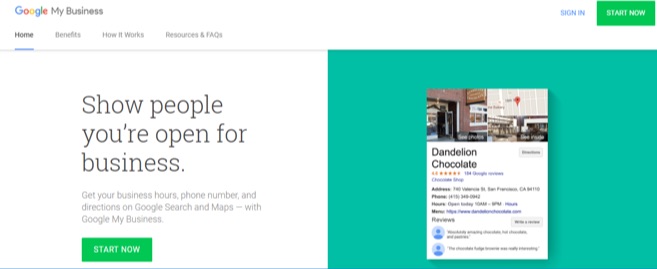
Your best bet is to communicate whatever you’re offering in the clearest and shortest way possible. A perfect example of “brief and clear” is Google My Business’ homepage:

In just over 20 words, with an image on the side, Google My Business clearly and briefly explains how they help your business get found when your brand name is searched.

So brevity and clarity could mean five, ten, 200 words. What matters is that your page provides enough information for your visitors to become convinced and take action. And this why not hiring a good copywriter for your business is a terrible idea. A good copywriter will do enough dirty work to produce copy that has both brevity and clarity.

3. Active voice on CTA Buttons

(Active voice describes a sentence where the subject performs the action stated by the verb.)

In other words, a CTA button with active voice is one that says, “This is what will happen when you (the visitor) click this.”

And active voice goes beyond just using verbs on your CTA.

It’s easy to think that all visitors understand what a colored CTA button means, but you’d be surprised. Sign-Up.to recently mentioned in their study that “Images are good, but it’s not always clear that the image is also a call to action.”

Just because you have a colored button on copy doesn’t mean visitors know where the button will lead when clicked. Example:

Where will Click Here lead when clicked? Is that button for a call, an email, or a link to another page? You need to let people be certain what your button is for, or you risk confusing people.

Here’s a perfect example of that from Toyota:

“Explore Prius” is active voice. It says exactly where the CTA will lead after it’s clicked—a page where you get to explore the Toyota Prius.

That’s active voice in action. Don’t put your visitors in a position where they’re not sure what your button is meant for. Make it as descriptive as it needs to be — Explore [my product], See a demo, Check out this case study, etc.

4. Specificity Over Hyperbole

Why not hyperbole? Because overstating can lead to visitors questioning your sincerity.

Instead, use copy that specifically communicates how you actually add value to people’s life and businesses. Twilio’s homepage is a good example:

Twilio is a tool that software developers use to add communication capabilities to the applications they build. And that’s exactly what they explain in the homepage: “Build software that communicates with everyone in the world.”

No overstatements. No hyperbole. Just the specific problem Twilio solves for people.

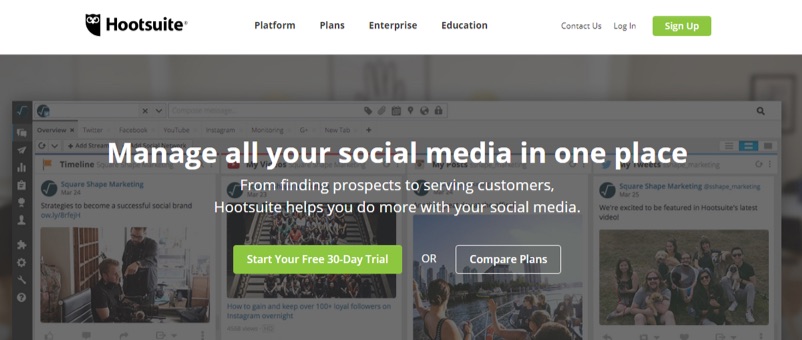
Hootsuite’s homepage is another good example:

According to SEMrush, Hootsuite gets about 7.2 million monthly visits. That’s impressive; yet, there’s no mention of how big they are on the homepage, but a brief and clear explanation of how their product solves problems for people.

Adding hyperbole to your copy doesn’t communicate any value. ConversionXL Founder Peep Laja says it this way (54:21): “You don’t add life to copy with hyperbole. [For example,] ‘We have the best pizza in town VS. We deliver pizza in 10 minutes’. [Pick] specific [over] hyperbole”.

5. Testimonials With Smiling or Happy Faces

Testimonials are powerful already, but one with a smiling face pictured? Terrific!

One Swedish study reveals that your smile has a huge effect on people around you — try smiling at someone and you’d see they almost couldn’t help but smile back, unless they consciously don’t want to. Amazing, eh?

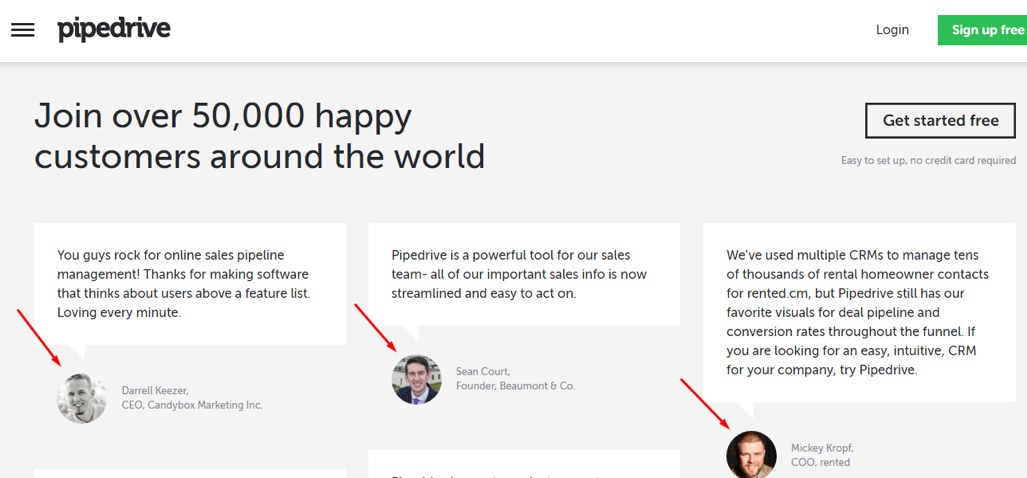
Pipedrive laid emphasis on the fact that their customers are actually happy people. Then they put those happy, smiling faces about 40% down their homepage.

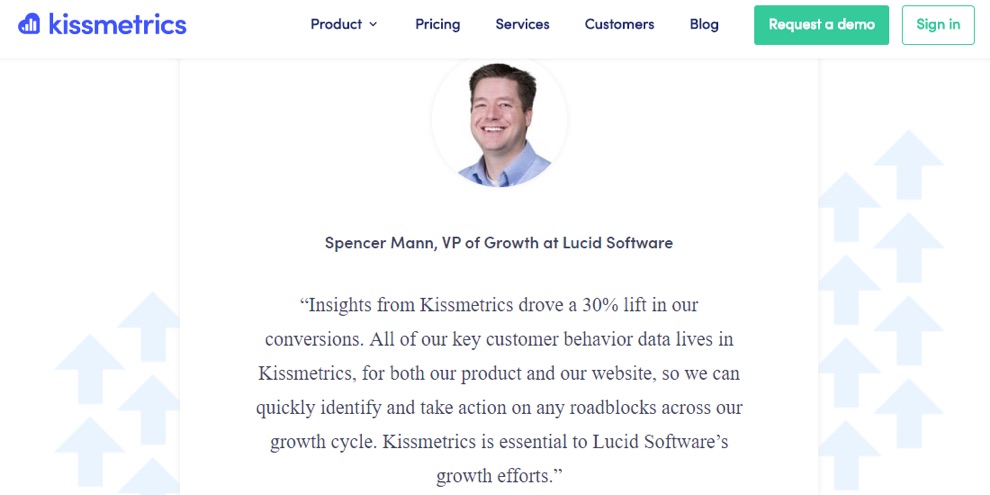
Kissmetrics understands this concept as well:

So, if you’re going to use testimonials with customer headshots, use those that are smiling already since they have a positive effect on viewers.

6. One Page, One Goal

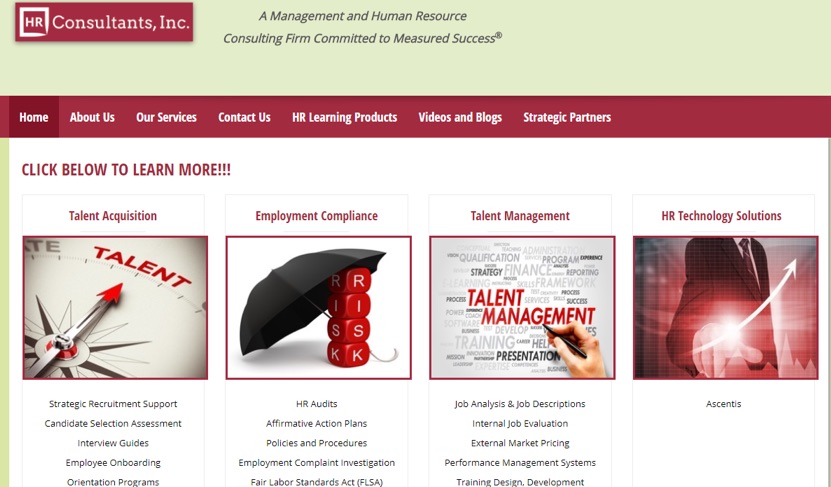
You’d think every marketer by now gets the concept of one page, one goal, until you see a homepage like this in 2017:

Several CTAs on one page. What’s the one goal that a page like this is trying to achieve? Virtually everyone would have no idea. And several studies have proved it’s far better to use one page for one result. The more specific you are, the better you’ll be at converting specific visitors.

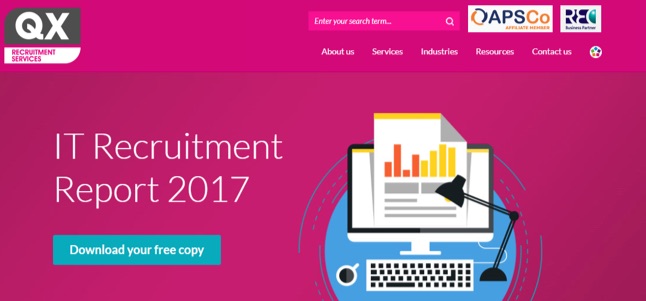
A good example of a homepage with one goal is this one on QX Recruitment Services:

In contrast to HR Consultants homepage (above), this one has only one goal. Which means if the homepage gets 2000, 5000, 20000, etc. monthly visitors, this report will be the number one thing catching their attention. And it’s the only action they’re first asked to take. Brilliant.

This way, QX Recruitment Services know how to measure the homepage’s success — it’s as successful as the number of downloads the report gets.

Start Converting With Your Homepage

I hope you enjoyed this article on Homepages Rarely Convert Because These 6 Elements Are Often Ignored

View original article here

The YouTube Ads perk you didn’t know existed

See details of post The YouTube Ads perk you didn’t know existed below

It should be no surprise to anyone that online video consumption has exploded in the last five years. YouTube is the second most trafficked site globally, according to Alexa rankings (behind Google Search, of course), and it has over 1 billion active users on the platform. That’s roughly one-third of all internet users around the world. One-third!

With all that growth and activity, businesses are quickly realizing the advantages of using online video as a means of marketing their services to a targeted audience of their choosing.

The problem is, creating a polished video to attract new business isn’t the easiest thing in the world to do, and there’s data to back that up. According to Buffer’s 2016 Social Media Report, a whopping 83 percent of marketers said they would like to create more video content if time, money and resources were no obstacles.

So what’s a cash-strapped marketer interested in getting into digital video content to do?

Enter Google’s YouTube Director Onsite.

What is YouTube Director Onsite?

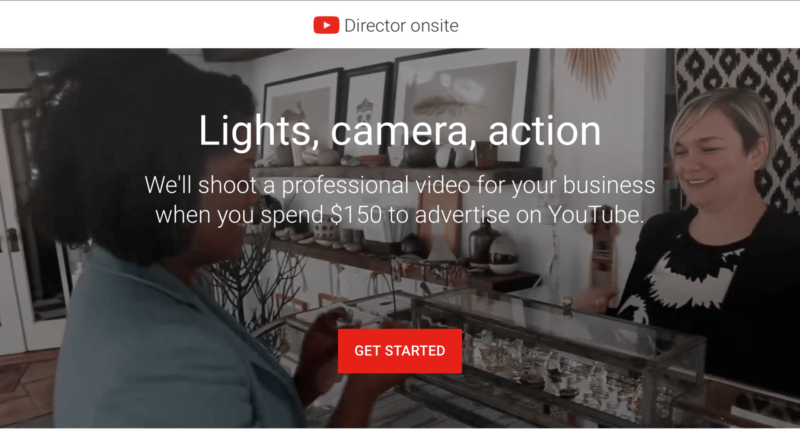
YouTube Director Onsite is a recently launched Google service that helps businesses create polished videos to showcase their products and services online. The service itself is technically free, though they ask that you spend at least $150 to advertise on YouTube once the video has been created.

youtube director onsite hero

How does Director Onsite work?

According to Google, the whole process, from the planning stages to having the video in your hands, happens in two steps over the course of two to three weeks. Let’s dive in.

Step 1: Plan the video you want to create

Businesses kick off the project by selecting the video template they feel is best fit for their business goals. Google breaks their video templates down into four main categories:

  • All About Your Business. If you’re interested in giving an overview of your product, service or company, this would be the best category to select.
  • Getting Personal. This category is the best option for you if you’re looking to share some personal information about your business, like founder stories or mission overview.
  • Product Showcase. This category is a great option if you’re interested in showing off a specific product in detail.

There are multiple examples of each category on the YouTube Director page to give you a better idea of the specific template category to select. Once you select your template, Google will match you with a professional filmmaker to help you write a script. This process takes roughly one to two hours.

It’s important to note that once your script is completed, you are no longer able to make any adjustments to the template or the structure of your video. Take some time during the first call with your filmmaker to clearly explain your business and the goals you have for the final video. They will be able to tell you if the template you selected is the best fit, based on your goals, or recommend an alternative prior to writing the script.

Step 2: Shoot your video with Google

With your template selected and your script written, it’s time for your close-up. Your filmmaker will work with you to schedule a time for the video shoot that works best for you and your team.

First email with YouTube director

My recommendation is to stick with the time you selected and only reschedule if it’s absolutely necessary. There’s room for a tiny bit of flexibility here, but if you reschedule the video any time after the 30-day mark of creating your project, Google may make you start the project from the beginning and assign you a new filmmaker.

The video shoot will last for two or three hours, and your filmmaker will edit and deliver the video to you on the same day as the shoot. Not too shabby for a few hours of work.

How is this different from other video creation services?

The most obvious difference between using YouTube Director Onsite vs. a local video creation service is the cost. Having gone through the process of using a traditional video creation service myself, I can attest to spending thousands of dollars on a video that I ultimately wasn’t happy with by the end of the project.

While there are no guarantees that you will be satisfied with the results, the time investment and cost are small enough to justify an experiment. It’s also important to note that Google trains their filmmakers on YouTube best practices. This means the edited video is built to perform well as a standalone video on your website and as a promotional YouTube ad.

What’s the catch?

Surprisingly, there isn’t anything that should prevent a resources-strapped business that’s interested in creating video content from taking full advantage of this service.

That being said, there are a few things you should keep in mind before getting started. First, YouTube Director Onsite is a “free” service — so long as you commit to spending $150 on YouTube advertising. In my opinion, a professional quality video plus targeted traffic sent to that video for $150 is still a pretty sweet deal.

Second, the final video will include the YouTube Director logo in the corner of your video. It appears 10 seconds into the video and lasts for 10 seconds.

Third, the service is only available in seven US metro areas: San Francisco, Los Angeles, Chicago, Atlanta, Washington, D.C., New York and Boston. Google says they intend to expand to more metro areas quickly.

youtube director onsite locations

All things considered, these are small prices to pay for professional video content that can be used in a number of different ways (video content for your website, online ads and so on).


Teachers Vs Social Media

check out this post on Teachers Vs Social Media

Teachers have always faced challenges – time changes the medium but not the content. The teachers of today still face the issues of bullying and abuse, fighting against a tide of inattention. In 2017, however, they are working against smartphones and the digital world rather than pieces of paper and fisticuffs.

One of the areas that teachers find hardest to tackle is social media. Nominet’s recent research into the impact in the classroom found that secondary school teachers lose an average of 17 minutes every day to social media disruption – that’s over 11 days each year. This is not only short-changing our kids but each school’s potential too.

The youngsters of today were born into a digital world and use social media to operate within it. Social media platforms are a place for them to express themselves and discover who they are. They can connect with likeminded people at a distance as they carve their own place in the world.

Unfortunately, sites such as Twitter, Facebook and Instagram are playing catch-up when cyberbullying and abuse inevitably appear. Social media has expanded many issues that teachers deal with in the classroom, with students found to be the victims of cyber bullying and online abuse, as well as even sharing explicit content during lessons.

Also alarming is the news from the NSPCC that social media exacerbates mental health issues such as anxiety and depression despite also offering a lifeline for adolescents; it’s a double-edged sword. Our own research found that half of all teachers believe social media contributes to their pupils achieving lower grades than their potential, while 57% think it has negatively affected their students’ mental health.

But social media is here to stay. Young people will find a way of using it however carefully a school tries to clamp down on usage. A case in point comes from one of England’s leading independent schools that admitted to monitoring their students’ comments on social media to check for criticism of the school, prompting protests from the students themselves. Perhaps the only way to progress is to harness social media for good as far as possible in the school environment.

This starts with ensuring teachers feel confident and able to educate their pupils on social media issues, including sharing coping strategies for cyber bullying and making clear the potential ramifications of creating or sharing explicit content. We found that less than a quarter of teachers believe they definitely have the right skills to cope, making a strong case for more training and support of teachers – or even creating roles for Digital Leaders in schools.

Teachers also need to feel confident to take the next step, from broadcasting on social media to using it to communicate with the children they educate or even as a classroom tool. Many schools have already joined the social media bandwagon, using Twitter to contact and communicate with parents and update students on closures or changes to the school day. Positive use of platforms in the classroom could be encouraged with simple steps such as incorporating sites such as Facebook into lesson plans – great for closed group class projects and sharing relevant research and ideas. This must be considered with regard to the official age restrictions for each of the social media platforms, which sits at 13 for Twitter, Facebook and Instagram.

I hope you enjoy this writeup on Teachers Vs Social Media

view original

How to Leverage Behavioral Data with Segment

Here is a article on How to Leverage Behavioral Data with Segment.

Be sure to view the entire article and view the original site

Behavioral Data is Critical for Driving Growth

Tracking customer event data, such as for Kissmetrics’ behavioral analytics solution, is an integral part to any successful online business–but I bet you already knew that. You might also know that installing Kissmetrics tracking code across your platform is relatively straight forward, though it can get complex depending on your specific requirements.

The complexity and management overhead of event tracking can rise quickly when every data-capturing tool your team adds requires developers to implement tracking code for every product. It is time consuming and can take up resources. And no big surprise, this can create friction between marketing and engineering. You definitely knew that… cue engineers and marketers nodding their head slowly

Customer Data Management with Segment

Customer data management platforms are the right way to go for leveraging customer event data across your company. We’re going to focus on one we work with quite often, Segment.

Segment, which recently raised a $64m series C, solves the customer data management problem and then some.

Here’s how it works:

You install Segment tracking code once and they’ll collect all customer event data and integrate it with all the top applications and send the data to them accordingly. Segment captures data from every customer touch point and then sends your customer data to the tools where it can be used most effectively. Their goal is to take the step of adding and managing unique snippets with each new tool off the table.

Beyond the ease of adding new tools to your automation stack, all the bugs that can occur by constantly adding snippets and the contradictory data across tools is eliminated because everything flows through Segment.

This is a huge win for engineering and marketing teams. Engineering can focus on creating new products and experiences and marketing is free to work with all the different tools they need without bogging down engineering. Beyond that, experimenting with new tools is easier and more feasible. Cue engineering and marketing nodding happily…

Get the Data and Use It

Understanding customer behavior and triggering actions based on that behavior is the lifeblood of any successful business. Collecting event data from every source possible and sharing that data across applications and organizations is necessary to accomplish that. Segment will collect data from every one of your platforms–mobile, web, server and cloud. From there, it can disperse the data however needed.

First, Understand Behavior

Kissmetrics is a Customer Engagement Automation platform. That’s behavioral analytics plus email campaign automation. Understand who your best customers are, and how to get more of them.

Kissmetrics processes all the customer data and delivers reports so you can understand what’s going on, what’s working and what’s not. It helps you determine how to interact with your customers to keep them on track. You’ll find where prospects fall out of the funnel, where they get stuck and how paying customers use your product.

Get started fast with Segment + Kissmetrics

Because of Segment’s straightforward integration, it’s easy to get started using Kissmetrics’ behavioral analytics. In no time, you’ll see the data you’re capturing via Segment show up in Kissmetrics to learn exactly how your prospects and customers are behaving across your website and products.

Kissmetrics customers with Segment have raved about the integration. It’s simple: your developers only need know Segment’s API and two methods: identify and track. Then you’re off to the races.

If you’re implementing Kissmetrics and don’t plan on implementing any other tool that requires customer data tracking, you can just use Kissmetrics native integration. But if you’re going to be implementing more tools, we strongly recommend using Segment.

Special offer to get started with Segment and Kissmetrics

I hope you enjoyed this article on How to Leverage Behavioral Data with Segment

View original article here